Slow Roast Leg of Lamb with Garlic, Rosemary, and Rich Gravy Recipe
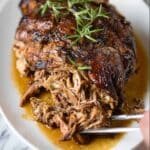
This Slow Roast Leg of Lamb recipe is a forgiving and easy method to achieve tender, fall-apart lamb by slow-cooking it partially submerged in a flavorful liquid of garlic, rosemary, and broth. Perfect for those who enjoy rich, deeply infused lamb rather than the traditional pink, medium-rare roast, this method keeps the meat moist and flavorful over a long roasting time.
- Prep Time: 15 minutes
- Cook Time: 5 hours 15 minutes
- Total Time: 5 hours 30 minutes
- Yield: 8 servings
- Category: Main Course
- Method: Roasting
- Cuisine: Western
Ingredients
Lamb and Seasoning
- 2.25 kg / 4.5 lb leg of lamb, bone in (or shoulder)
- Salt and pepper, to taste
- 1.5 tbsp olive oil
- 1 whole garlic head, unpeeled, cut in half horizontally
- 1 onion, quartered (unpeeled is fine)
- 2 rosemary sprigs
Liquid
- 3 cups beef stock/broth, low sodium (or homemade)
- 2 cups water
Gravy
- 4 tbsp white flour
- 1 cup water
- Salt and pepper, to taste
Instructions
- Preheat oven: Preheat your oven to 170°C/335°F standard or 150°C for fan-forced ovens, ensuring the oven reaches the right temperature before roasting.
- Prepare aromatics: Place the garlic halves, quartered onion, and rosemary sprigs in a metal roasting pan to create a flavorful bed for the lamb.
- Season lamb: Position the leg of lamb right side up in the pan. Generously sprinkle salt and pepper all over the surface and rub it into the meat. Then turn the lamb over so it mostly rests on the garlic and onion, seasoning it again with salt and pepper and rubbing it in well.
- Add liquids and cover: Drizzle the lamb with olive oil. Pour the beef broth and water around the lamb, partially submerging it but not fully covering the meat. Cover the pan tightly with foil to allow some steam to escape while keeping moisture in.
- Slow roast: Place the covered pan in the oven and roast for 4.5 hours to allow the lamb to become tender enough to pull apart easily with a fork or tongs.
- Check tenderness and turn: Remove the foil and turn the lamb over. Check if the meat is tender by trying to pry some off with a fork; if it’s not tender enough, cover again and return to the oven to continue slow roasting until it is.
- Brown the lamb: Return the uncovered lamb to the oven and roast for an additional 45 minutes or until it is well browned and has a crisp exterior.
- Rest the meat: Remove the lamb from the oven and spoon some of the pan juices over it. Transfer to a serving platter and cover loosely with foil to rest while you prepare the gravy. This resting keeps the meat warm for 1 to 1.5 hours.
- Make gravy: Skim off some of the fat from the surface of the roasting liquid in the pan. Place the pan on medium-high heat on the stove until the liquid bubbles. Whisk in the flour, stirring continuously to mix and reduce the liquid into a thick sludge.
- Adjust consistency: Slowly whisk in 1/2 to 1 cup of water until the gravy reaches your desired consistency. Season with salt and pepper to taste, noting that additional salt is usually unnecessary.
- Strain and serve: Strain the gravy into a bowl to remove solids, pressing out juices, then pour into a serving jug.
- Serve: Serve the tender lamb torn off with tongs alongside the homemade gravy for a rich and satisfying meal.
Notes
- Lamb cut: This recipe works with lamb leg or shoulder. Shoulder has more fat and can be roasted uncovered, but this slow-roasting method with liquid is ideal for leaner leg cuts to keep meat moist and flavorful.
- Positioning: The upper side of the lamb leg has more meat and fat, so it should be cooked partially submerged in the liquid to stay tender and juicy, while the underside is flatter with less fat.
- Side suggestion: Try pairing this rich lamb with truly crunchy roast potatoes for a perfect complementary texture and flavor.
- More roast lamb: Explore different recipes for ultra tender slow cooker roast lamb, classic blushing pink roast lamb, or a Greek lemon garlic slow-roasted leg of lamb.
- Roasting time guide: Use the roasting times rounded up for your lamb weight (e.g., about 4.5 hours for 2 kg) for best results.
- Calories note: Nutrition info may overestimate calories because some fat is skimmed before making gravy; actual calories per serving may be closer to 500 when accounting for discarded fat.